By: Gabriel Kay Young (DinDeng – ดินแดง). Edited by Su Lin Lewis.
In the back of cupboards, wardrobes and under mattresses in homes of the poor there are archives of the oppressed. The mementos of resistance that have been carefully stored, hidden for a later date. In Thailand, despite the mass repression of the Red Shirt Movement, these archives still wait optimistically for another future.
–
From the author: My 2025 book, Ghosts of the Red Soil was an experimental history of Thailand’s political memory told from below, from the voices that made up or suffered from the death of revolutionary struggles. When I was asked to write on archives for Under The Banana Tree, one passage instantly came to mind:
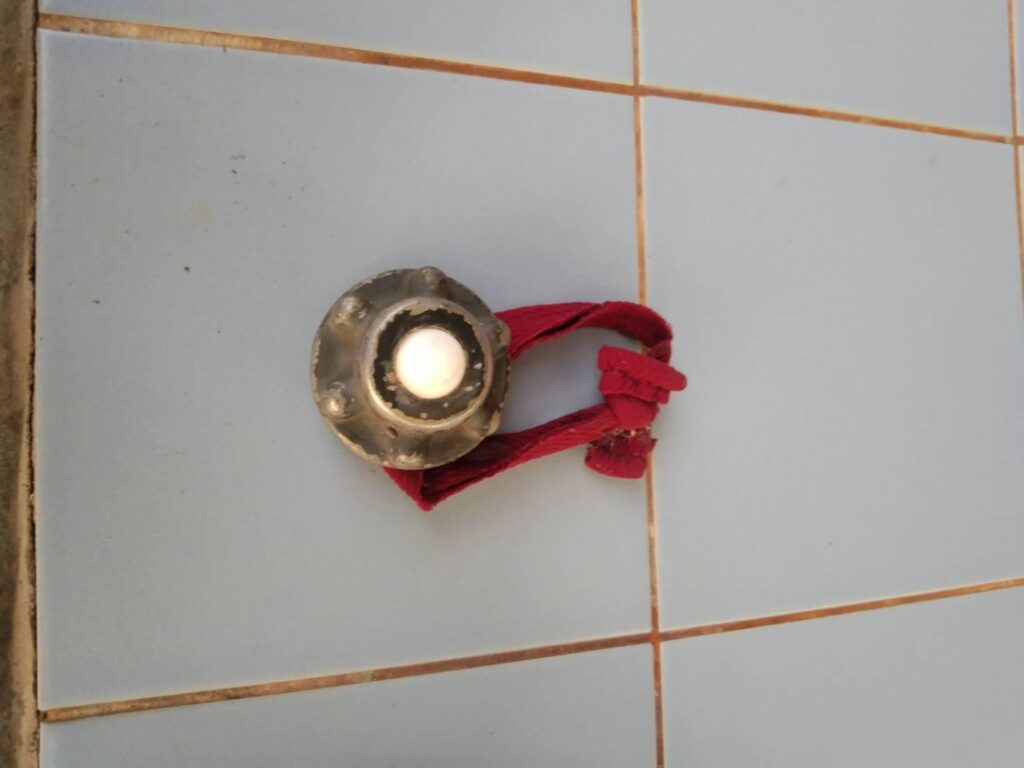
In his wardrobe he has a belt, the buckle is crafted out of a piece of metal he stole from a Bangkok tank. “That’s pretty fucking cool.” I tell her, she agrees.
–
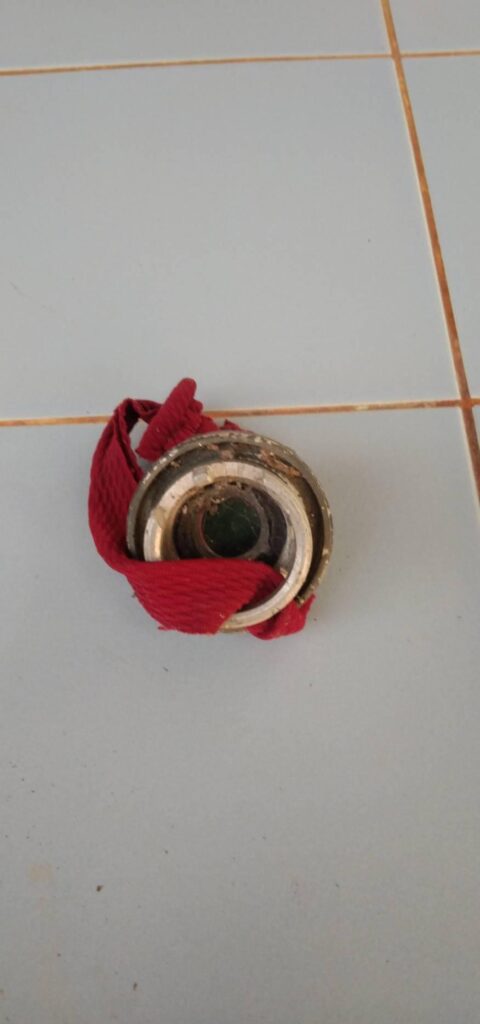
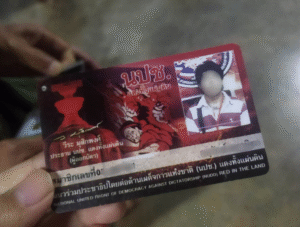
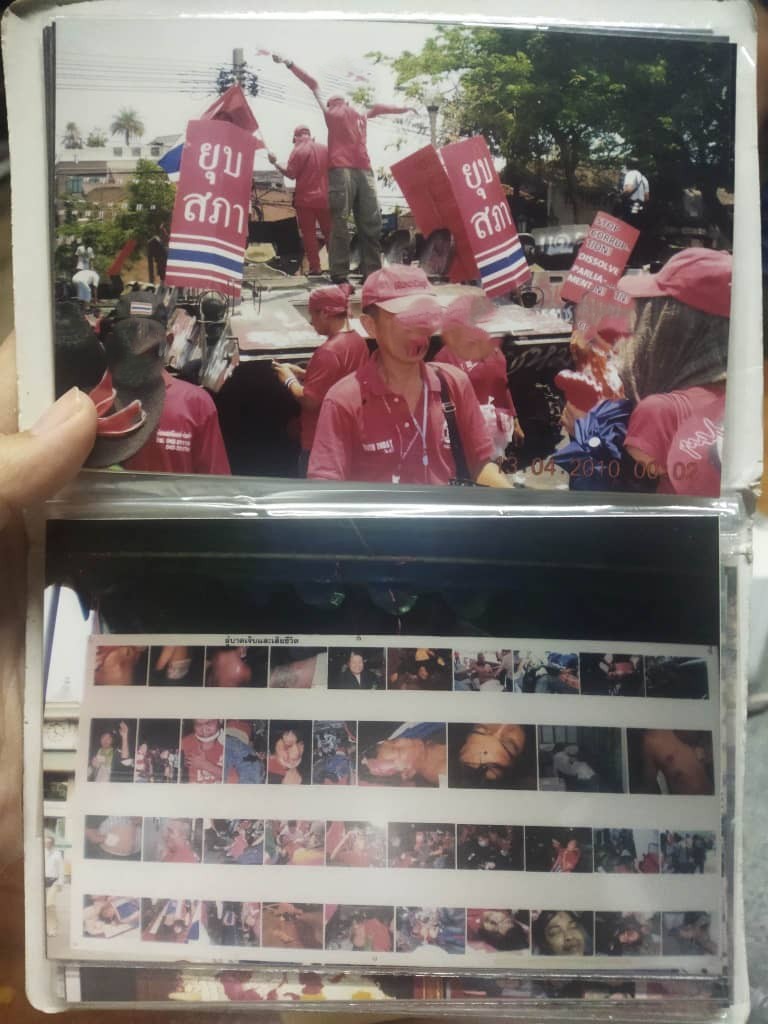
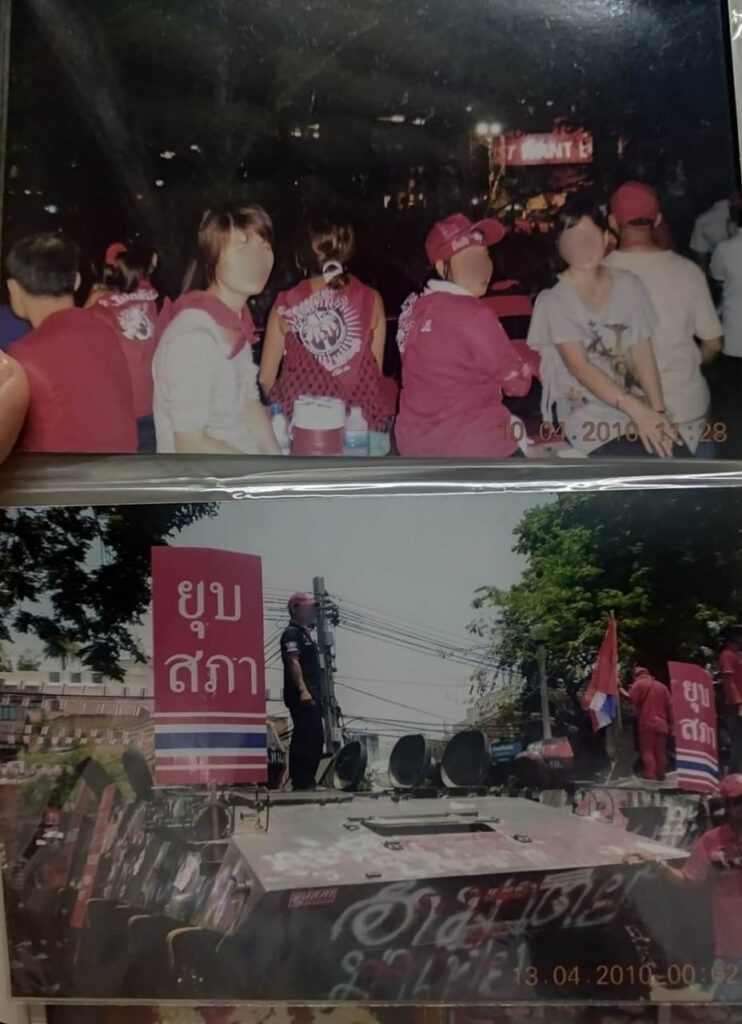
Trophies are displayed, the hidden belt buckle is not. This one waits in the dark, wrapped in denim. It is a small, crude object, a piece of broken re-forged military hardware. Kept in the same closet is an envelope with a series of photo-negatives. The pictures are taken on what looks like a disposable film camera with a bright flash. They show smiling women in red bandanas, busted up tanks covered in graffiti, dead bodies draped in the Thai flag, close ups of their lifeless blooded faces. Slotted inside the envelope is a membership card; it’s red, it has a passport style photo and a membership number. It reads “The United Front for Democracy Against Dictatorship is red throughout the land” in both Thai and English.
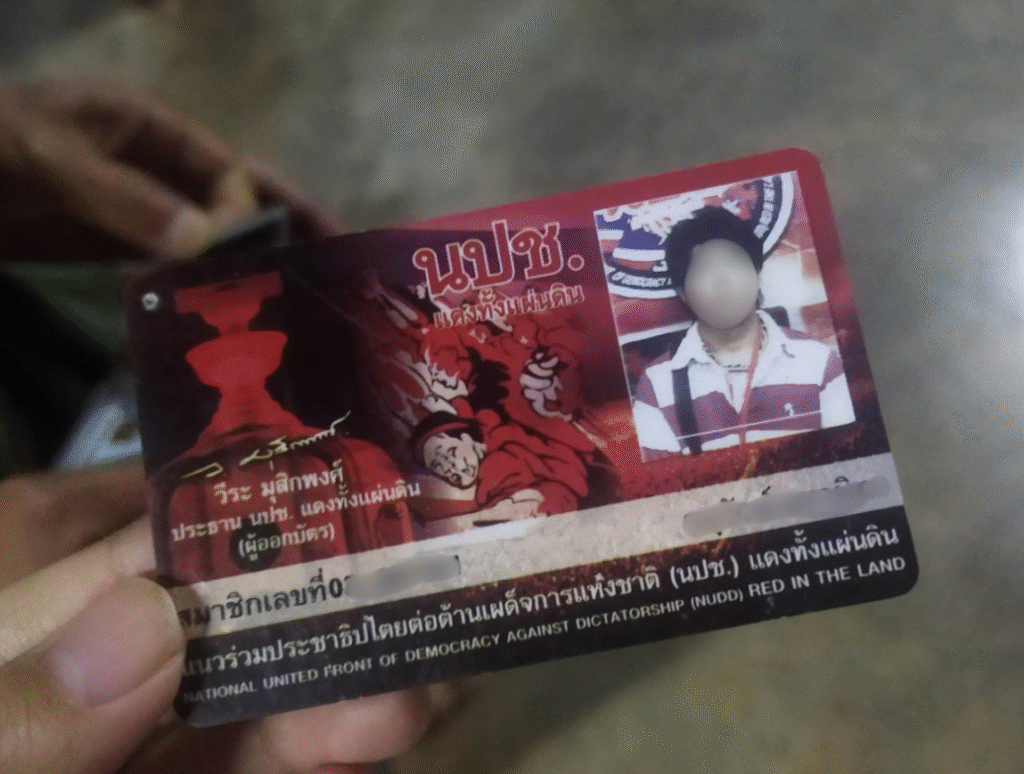
Its owner Ong (not his real name) in rural Uthai Thani tells us he’s tired of politics now. “All that fight was for nothing”, he says. But he did not throw the buckle away, rather he archived it.
After the 2014 coup, the Red Shirts went underground and took their relics with them. The red bandanas that once turned streets into rivers of colour were folded or stuffed into bedside drawers. The membership cards slipped into the back pages of old books or photo albums. The t-shirts from rallies long since broken up, the flags that flew from pickup trucks- all of it retreated. Not destroyed or surrendered, rather, hidden.
Given the scale of the Red Shirt movement, by 2014, close to 10 million people were estimated to be involved, mostly the poor from rural areas. It’s impossible to know exactly how many kept personal archives in their homes. No one has conducted a survey of wardrobes, but for those of us who are familiar with Red Thailand, such micro-archives are commonplace.
This is what working-class archiving looks like after defeat. No climate-controlled vaults, no accession numbers, no glass cases, not contained. Rather, a wardrobe, or a plastic bag under the bed. They lie dormant, perhaps in waiting.
Look closely at what got saved. The photographs from that family album; smiling women in red bandanas, yes, but also busted tanks covered in graffiti, dead bodies draped in the Thai flag, close-ups of bloodied faces. Who keeps such images? Someone who believes that they have an essential need to bear witness, that the story is not over. You don’t preserve such pictures of the (then) newly dead unless you expect, one day, to need to prove something. To show someone who was not there: This happened. This was done to them and we won’t forget their sacrifice.
The membership card stranger still mimics the state’s own bureaucracy- a passport photo, a number, a bilingual declaration. To keep it is to maintain some kind of a parallel citizenship. Time and again the Thai state insisted the Red Shirts were finished, dispersed, defeated but the card says otherwise. From inside the drawer it says “The united front is still red throughout the land. Just not right now.”
And the belt buckle, you can’t steal a piece of a tank and wear it on your hip without making a statement. The tank belongs to the Royal Thai Army, but this piece of it now belongs to a peasant in rural Uthai Thani who fought against it. A small, private victory. The tank did not win forever, part of it got melted down, bent into shape, and now holds up Ong’s trousers, if he so wishes.
Ong says he is tired. Believe him. By 2014 the public movement was largely extinguished. The rallies stopped, the leaders were arrested, disappeared or in exile. People like Ong don’t march anymore. He does not wear the red shirt. Like many from his generation he is, by any public measure, a private citizen who has given up politics. And yet the archive has remained in the wardrobe, despite the risks it posed; with many Red mobilisers subsequently arrested and prosecuted. Like so many others, Ong didn’t throw it away.
That is the contradiction at the heart of working-class archiving. You do not have to consciously believe in the revolution today. You only have to refuse to destroy the evidence that it once existed, the objects keep the possibility alive, a material connection to that past revolution. They are patient, unlike their human companions they do not age, give up or get tired. The red bandana doesn’t know that the coup plotters succeeded. It only knows how to be red. The belt buckle does not feel defeat.
Derrida argued that the archive is never about the past alone, rather it is always oriented toward the future, toward the question of what will come. “The archivization produces as much as it records the event.” This is the “future anterior” of the archive; the idea that the true meaning of an archived piece will only be determined by a witness who has not yet been born.
One day, someone will open that wardrobe. Maybe Ong himself, after a long sleep. Maybe his children, or future grandchildren and when that happens, the archive and the belt buckle will still be there. It will still be “fucking cool”. Still waiting for a time when it is not just a hidden relic but something you wear defiantly into the street again.
That is the revolutionary aspiration buried inside every hidden archive. Not constrained to nostalgia or memory. Rather a fuse, still dry, still capable of catching a spark.