By: Esty Pratiwi Lubarman & Neysia Novaristia (Lembaga Sejarah Sosialis Indonesia / Institute of Indonesian Socialist History). Edited by Hyojin Pak
The Indonesian left began to re-emerge in the 1980s, after nearly two decades of silence imposed by the New Order. This revival crystallised in the founding of the People’s Democratic Party (PRD), a significant milestone in the history of the Indonesian left. That re-emergence took place under heavy constraints. The New Order regime, born from the 1965–1966 military coup of Suharto, systematically repressed any form of expression it considered “leftist,” “communist,” or “Marxist-Leninist.” The new regime did not only eliminate a whole party and its sympathisers, but also the tradition of political organising, as well as the wealth of political consciousness of the Indonesian people.
Ordinary working people were hesitant to get involved in politics, students were limited exclusively to non-political activities, leftist books were systematically eradicated from schools, and coherent ideology was replaced by the loose morals of Pancasila. This project produced what the regime itself termed the ‘floating mass’. Although the New Order fell in 1998, its traces linger: the masses remain ‘afloat,’ and the PRD, then the most influential and radical organised socialist force at that time, has long been marginalised from the official narrative of the post-Reformasi era. Other left-wing movements also deserve attention.
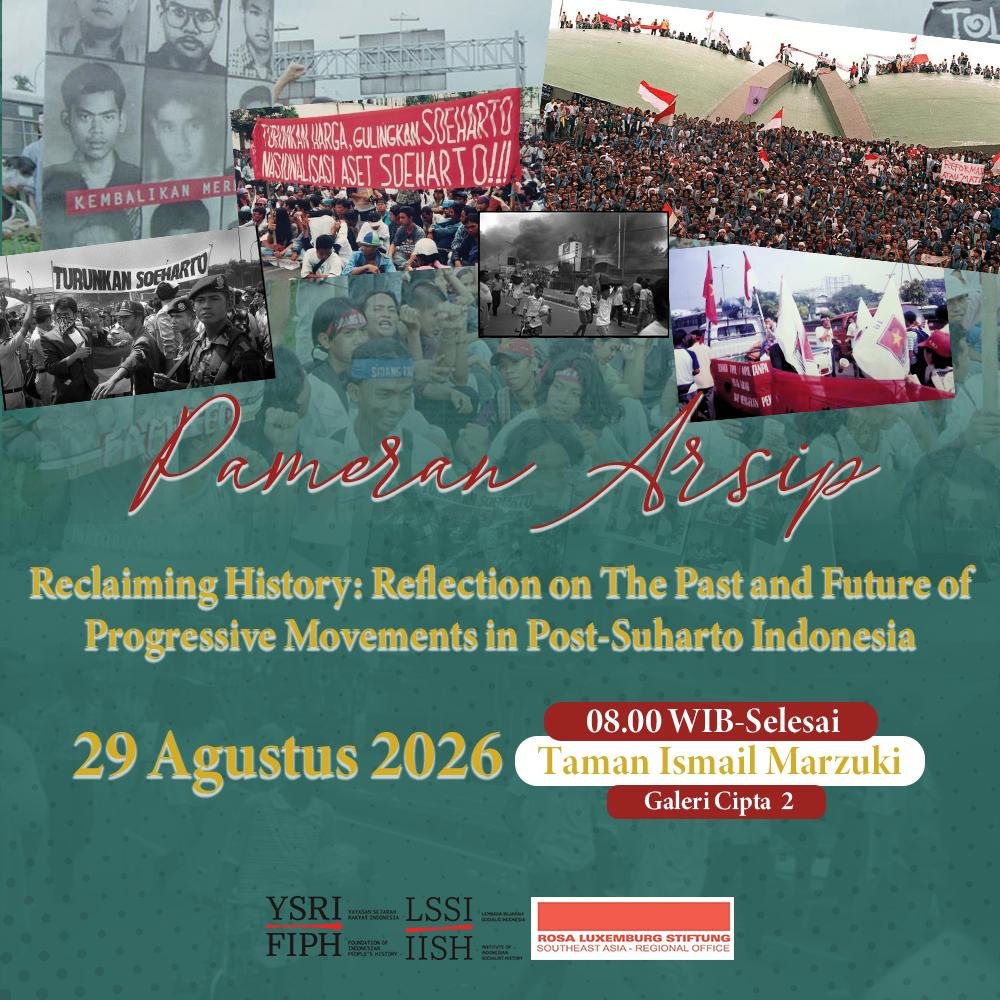
Redirecting the spotlight onto the history of the Indonesian left movement and the pro-democracy movement, especially the role of the PRD, the Reclaiming History programme set out to draw lessons from the struggle against the military regime for today’s movements. To celebrate the role of the leftist movement in the struggle against the New Order military regime, IISH (Institute of Indonesian Socialist History) (1) designed a series of seminars and exhibitions, creating space for critically reflecting on the trajectory of progressive movements as well as reaching audiences interested in the left, especially the young people who will rebuild Indonesian society. It also allowed us to document oral accounts and research the history and dynamics of the Indonesian left. Through an oral history approach, this programme places the testimonies of activists as legitimate primary sources to understand the dynamics of resistance against the New Order’s repressive apparatus and the trajectory of the progressive movement thereafter.
A Pre-event Webinar: Revisiting the 1998 Reformasi
As part of the preparatory activities, a webinar titled “Revisiting the 1998 Reformasi” was held on 22 August 2026, featuring activists of the 1998 Reformasi movement and historians as speakers. This webinar was intended both as an introduction and as a way of aligning the ideas developed within it with the central ideas of the Seminar and Exhibition, so that the two agendas would connect thematically and reinforce the continuity of the narrative reflecting on Indonesia’s post-Suharto progressive movement.
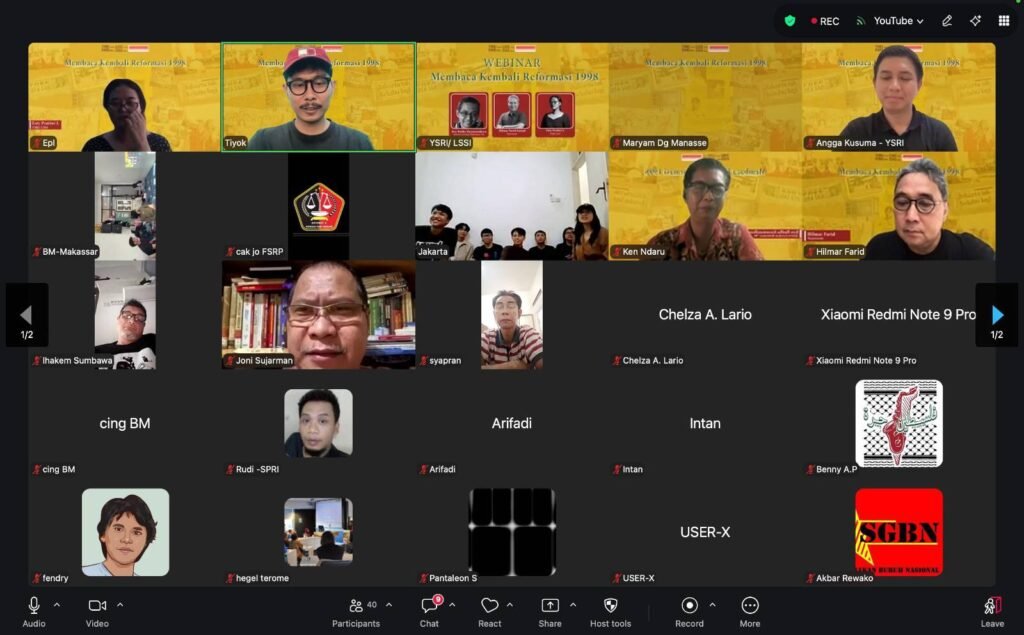
We invited Hilmar Farid, a historian, academic, and cultural activist, to speak on the broad landscape of the movement in the ’98 context; Ken Budha, a former New Order political prisoner who is still an activist, to speak on his experiences in the PRD organising workers and students during the peak repressive period; and lastly, Esty Pratiwi, the coordinator of IISH/YSRI, to share the importance of not stopping at studying progressive history as an active bystander, but also actively continuing the struggle, especially in radicalising young people.
Main Seminar: Reclaiming History: Reflection on the Past and Future of Progressive Movement in Post-Suharto Indonesia
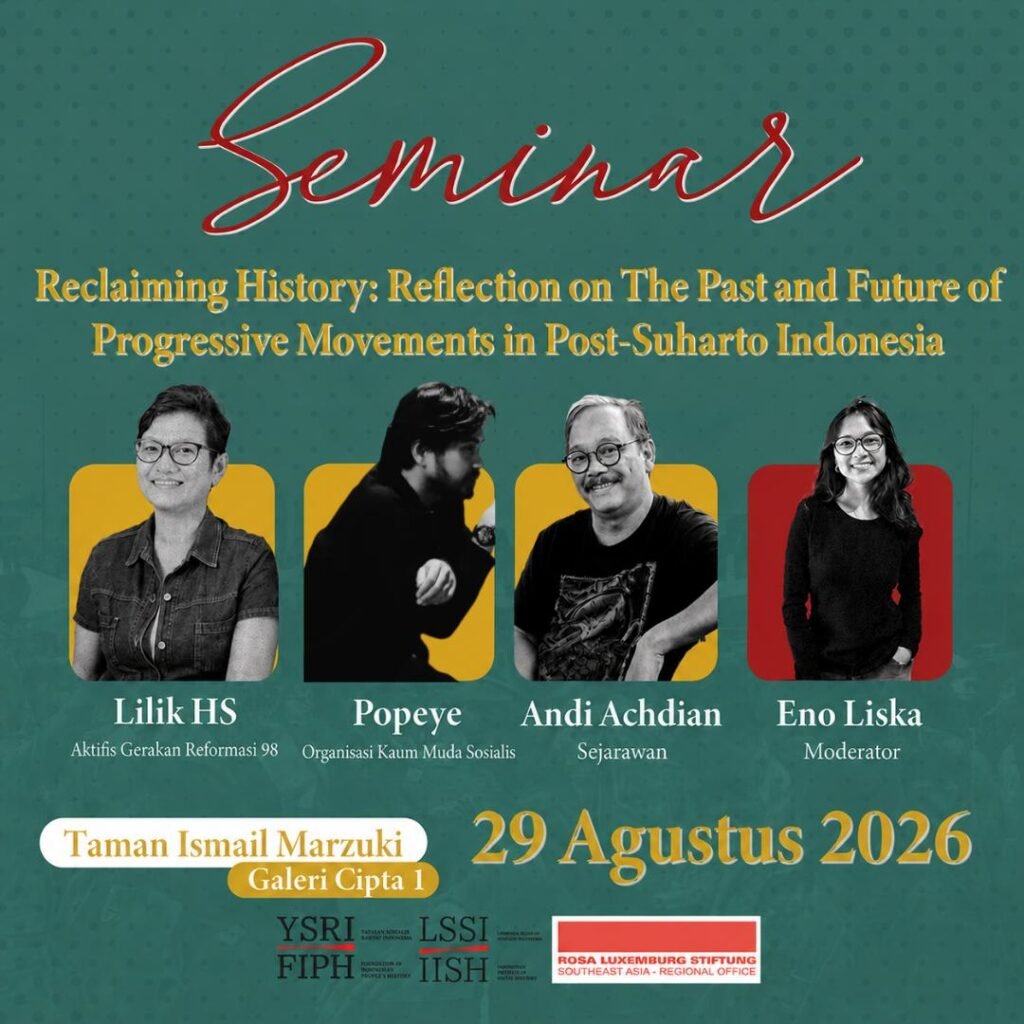
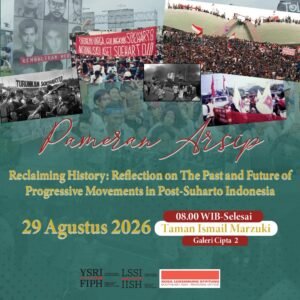
The main seminar, titled “Reclaiming History: Reflection on the Past and Future of Progressive Movement in Post-Suharto Indonesia”, was held on 29 August 2026 at Taman Ismail Marzuki, Jakarta. The seminar aimed to reconstruct and document the history of Indonesia’s progressive movements before and after the Suharto regime, particularly from the 1980s through the 2000s, while creating an intergenerational space for activists, academics, artists, journalists, and civil society actors to reflect on the achievements, challenges, failures, and lessons of past movements.
The seminar opened with MC Angga Kusuma welcoming participants and introducing the agenda. Esty Pratiwi, coordinator of IISH/YSRI, then introduced the “Reclaiming History” theme, highlighting why progressive movements need reflection in the post-New Order era. Curator Neysia Novaristia concluded the opening event by symbolically inaugurating the exhibition.
The first session, presented by Lilik HS, an activist from the 1998 Reformasi movement, discussed the development of movement organisations during the Reformasi period and the experiences of activists in organising and building networks under the authoritarian and militarised New Order regime. The session highlighted the organisational and political challenges faced by activists prior to the fall of Suharto.
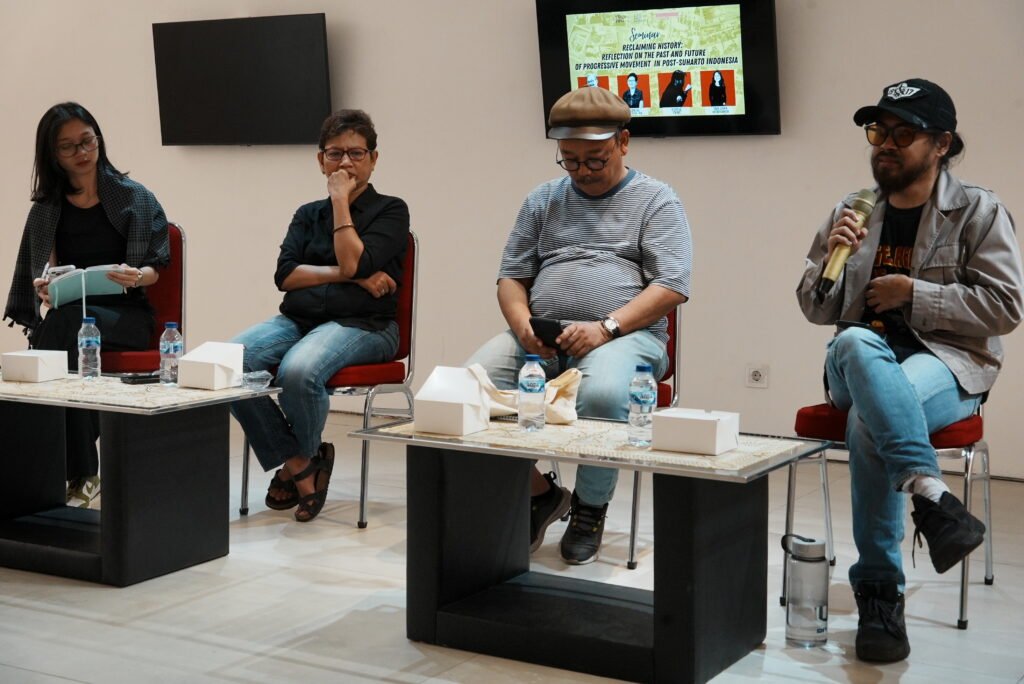
The second session, presented by Andi Achdian, a pro-democracy activist and historian, examined the political activities and dynamics of various organisations involved in the movement leading up to Reformasi 1998 and their development following the collapse of the New Order regime. The discussion provided historical reflections on changes within the movement and considered the current and future challenges facing progressive movements in Indonesia.
The final session, presented by Popeye from the Socialist Youth Organisation (Organisasi Kaum Muda Sosialis, OKMS), comprised an elaboration of the relevance of the achievements and legacy of the 1998 Reformasi to the current situation of youth movements. Ultimately, reflecting on the past serves to draw lessons from it and to use those lessons as a basis to formulate strategies and tactics for strengthening and expanding progressive movements.
Archival Exhibition – Techne of Movement: Capturing Movement Against Authoritarianism Beyond Spontaneity
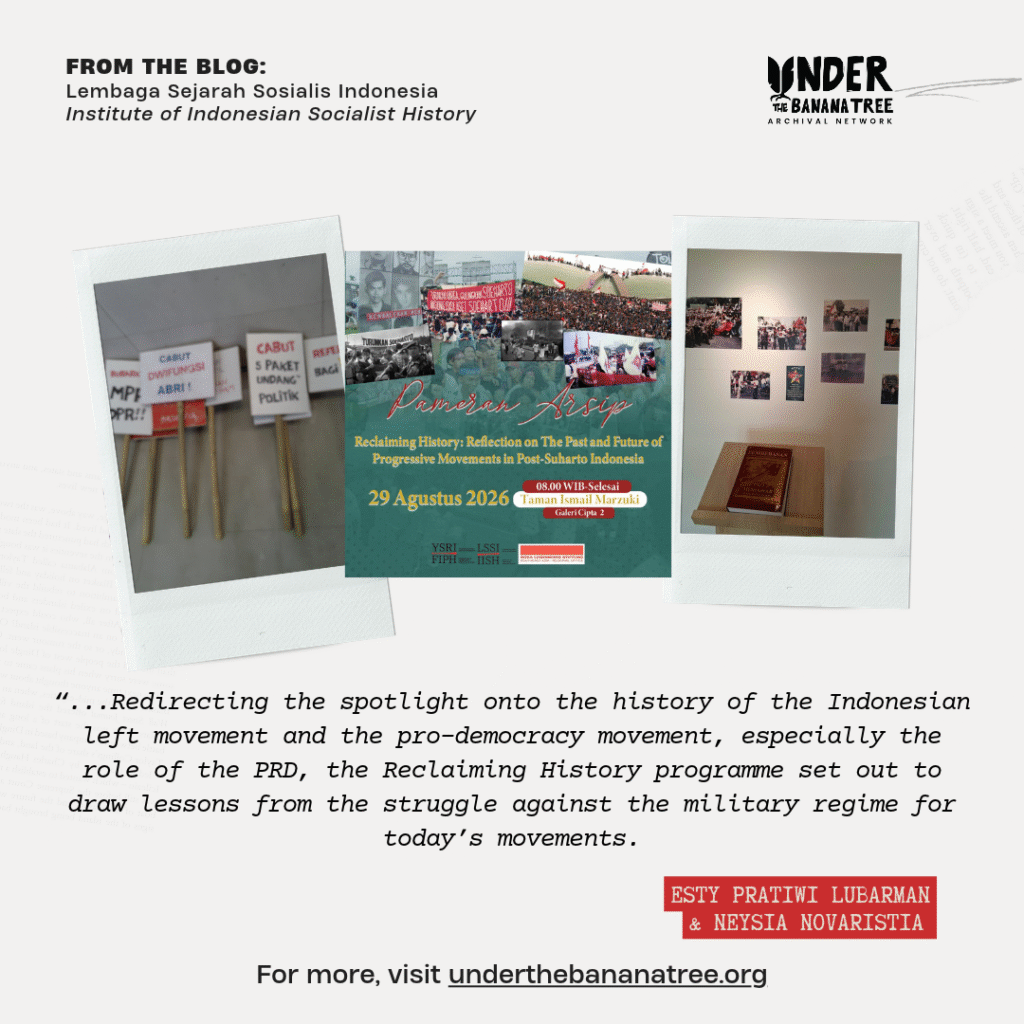
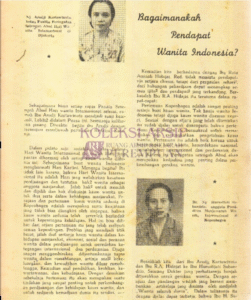
Alongside the seminar, we also curated an exhibition of the Reformasi era. In Activist Archives, Doreen Lee shows that underground resistance movements relied on what is called the techne of paper to produce most of their anti-government propaganda, internal communication, and legal documents in response to the state’s accusations of subversion. The archives on display brought to light the epistemic tensions that acted as a driving force for the hopeful gestures and morals of student activism, as documented and disseminated through various propaganda tools, including newspapers, letters, and minutes of meetings.
Seeking to reach a wider audience beyond political discussion, this exhibition carries a critical message: activism is more than protest. It also means building scaffolding for a long-term struggle that can sustain itself through peaceful times and crisis alike. In this way, the exhibition shows the groundwork behind a resistance organisation’s actions, whether underground or legal.
The exhibition follows the movement through three main periods, each period presenting three kinds of materials: documents (newspapers, letters, minutes of meetings, or pamphlets), protest artefacts/material culture (flags, pins, T-shirts, or banners), and audiovisual recordings (video footage). First, the Movement Building phase highlights the life of progressive movements during the height of New Order repression, a time when national stability was used to legitimise military control over civic space. It depicts how labour organisations and women’s movements survived and mobilised—operating both clandestinely and semi-openly—amidst intelligence surveillance, the criminalisation of activists, and the ABRI “dual function” doctrine.
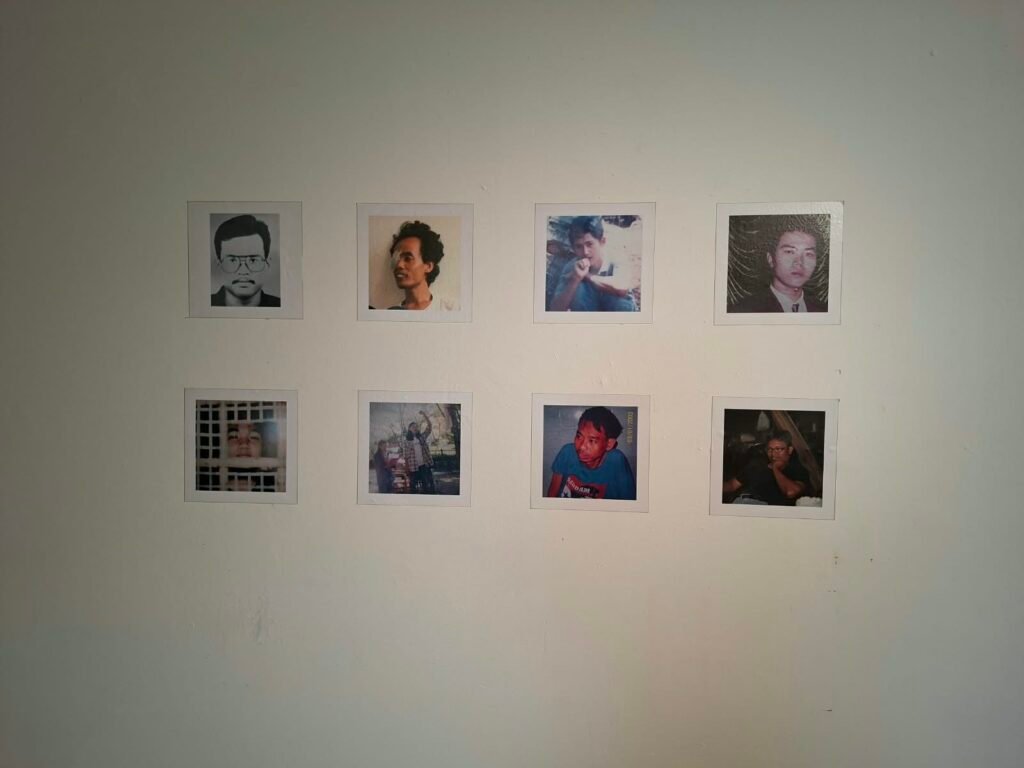
The second phase, Crisis (1997 – May 1998), traces the breaking point of the 1997–1998 economic crisis, which culminated in a wave of mass resistance and the fall of the Suharto regime. This section chronicles how various elements of the movement—students, workers, women, and other progressive groups—converged at a pivotal historical moment, opening up a political space that had been tightly sealed for three decades.
The third phase, the Reformasi period (May 1998 – 2000), examines the dynamics of progressive movements following the opening of the gates to democratisation: the euphoria of freedom of association contending with movement fragmentation, the co-optation of agendas by the old elite, and civil-military relations that had not yet been fully reformed. This phase also highlights how labour and gender issues found new avenues for articulation amidst a nascent electoral democracy.
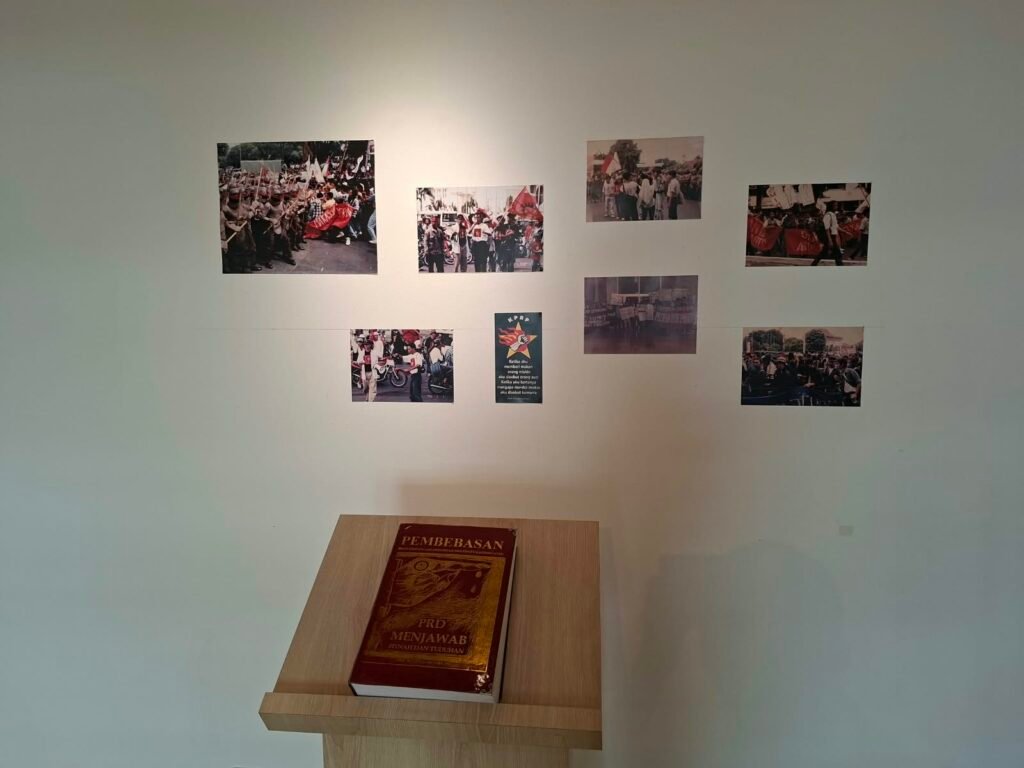
This programme passes the resilience of the 1998 movement to today’s young generation, and calls on them to carry the unfinished agenda of Reformasi forward. The movement’s organisational strategies and intellectual legacy offer young people concrete tools to take up that agenda amid Indonesia’s current complex social and political dynamics. By reclaiming a history long pushed to the margins of the official narrative, and opening it to activists, scholars, and newcomers alike, this programme seeks to build a more inclusive history of the progressive movement: one that future generations can learn from as they work towards a more just and democratic society.
———————————————
(1) The names LSSI/IISH (Lembaga Sejarah Sosialis Indonesia / Institute of Indonesian Socialist History) are used to introduce ourselves among organisations and movements, while YSRI/FIPH (Yayasan Sejarah Rakyat Indonesia / Foundation of Indonesian People’s History) is our legal name, chosen for security reasons given the political situation in Indonesia. Both names refer to one and the same organisation; they are not separate entities.