
Webinar
Explore our webinar series focusing on multifaceted archival praxis from the region and beyond.
Theme
What
- 1965, Archiving, Collectivism, Communism, Decolonisation, Democracy, Education, Feminism, Genocide, Indigenous, Knowledge Production, Memory, Oral History, People’s History, Proletariat, Socialism
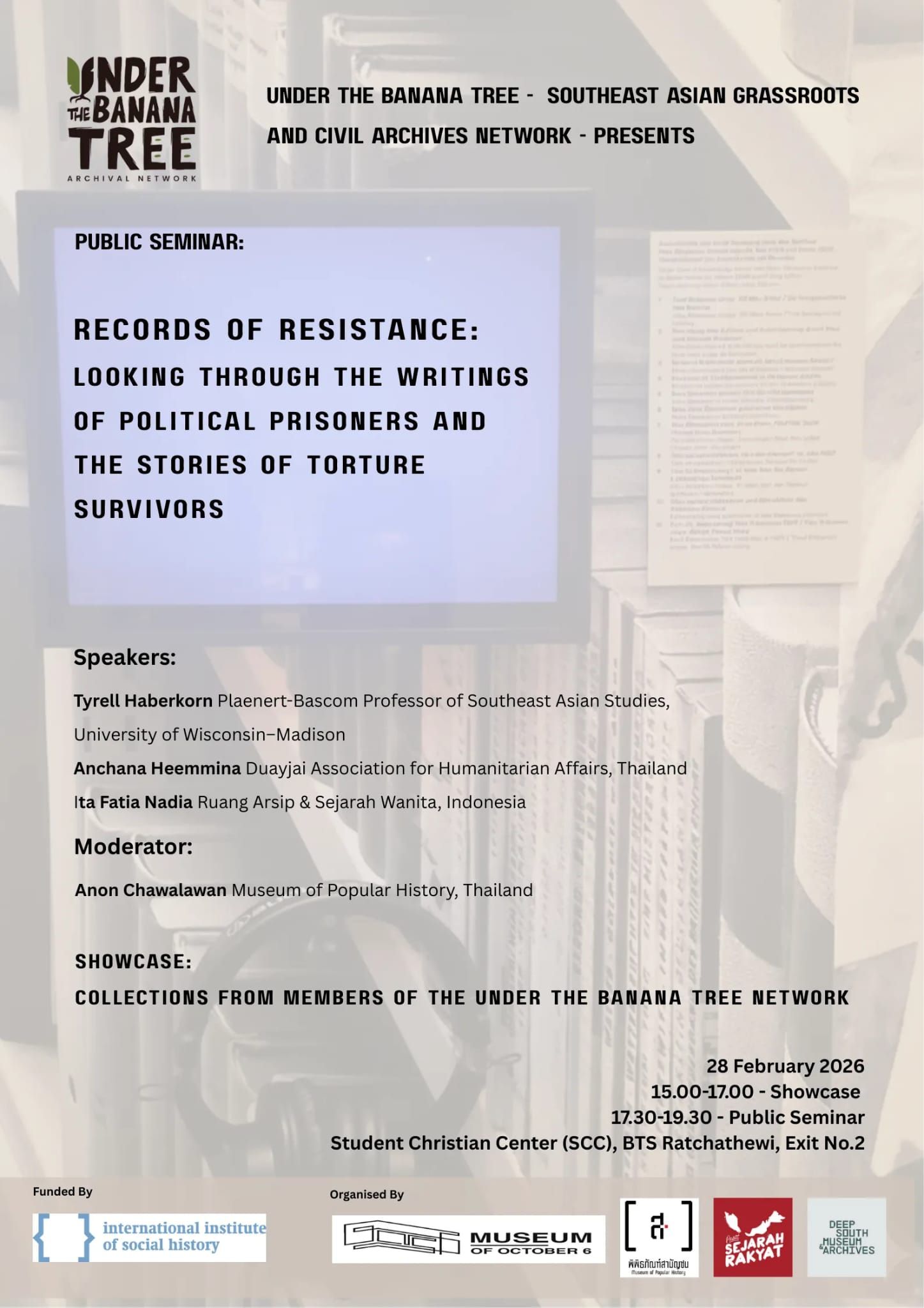
In drawing attention to multiple forms of archival resources: from letters, writing materials, testimonials and lived experiences of political detainees and torture survivors, how does such materials provide transnational insights to the socio-political contexts in the region? What goes behind the process of confronting the traumatic past, present and future within our milieu? How do we perceive the challenges in disseminating such materials in the struggle for truth and reconciliation?
- 1965, Archiving, Communism, Education, Genocide, Knowledge Production, Memory, Oral History, People’s History
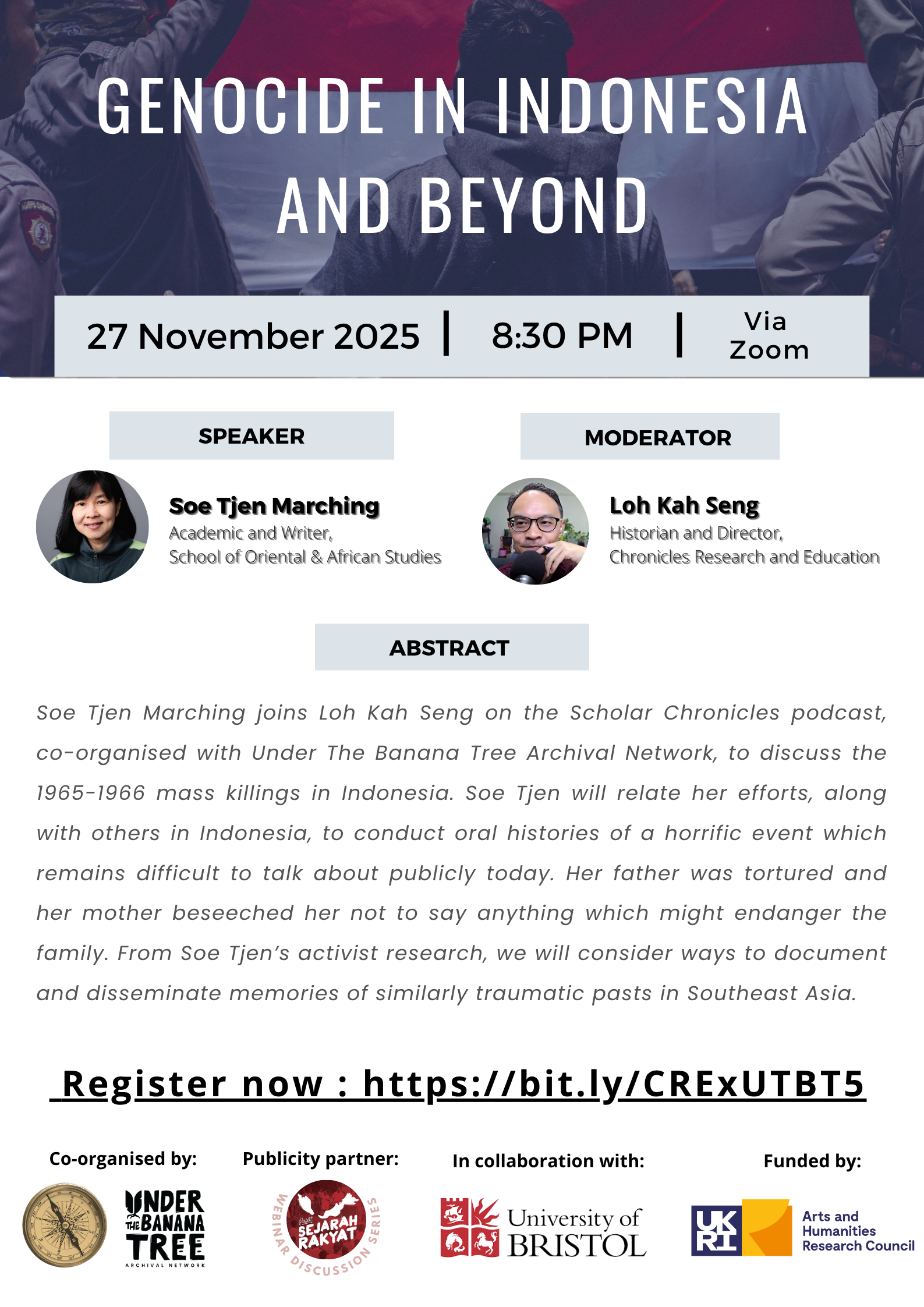
Centring on Soe Tjen Marching’s long-term engagement with oral history interviews; ranging from the 1965 massacres to the 1998 anti-Chinese riots in Indonesia, the webinar hosted by Loh Kah Seng of Chronicles Research and Education, explores the fragility of memory and archives, as well as the ethics of recording traumatic pasts.

- Archiving, Decolonisation, Education, Knowledge Production, Labour, Memory, Oral History, People’s History, Proletariat, Rural, Visual Culture
Plantation Afterlives: Songs, Memories, and the Politics of Care is a conversation centered on the filmmaking practices exploring songs, memory, oral traditions, and the worlds of Tamil plantation histories in Malaya(sia).

- 1965, Archiving, Decolonisation, Democracy, Education, Genocide, Indigenous, Knowledge Production, Labour, Memory, Museum-making, Oral History, People’s History, Rural, Visual Culture
This webinar examines “emotional facts” in archives, reframing them as sites of affect, containing both fact and feeling. Through Kolektif Arungkala’s praxis, it explores how archival engagement generates collective sensing and affective knowledge beyond conventional understandings of factual records.